
Striking a Balance Between Narrative and Data

I recently had the honor of being invited to speak at the Association of Legal Administrators (ALA) National Conference in Orlando, Florida. What a pleasure to meet so many experienced, thoughtful organizational leaders!

In addition to presenting my own session on Galvanizing Your Colleagues with the Power of Storytelling, I was able to attend a number of other educational programs. As eager as I was to listen to the speakers, I also found myself surveying the audience. In our age of digital distractions, how long would they be able to stay focused on the speaker, rather than their electronic devices? 

My informal observations showed that when the speaker was telling concrete, realistic stories about experiences that the audience could relate to, the listeners were not only on the edges of their seats, but their own corresponding stories were bubbling to the surface, in the form of whispered exchanges with their neighbors, nodding heads, or quickly scribbled notes. They wanted to hear and tell the stories of the issues they wrestle with every day.

When presenters resorted to statistics and survey results, the audience slumped in their seats, and their attention wandered.

This conundrum was raised directly in my session during the Q&A period. Someone asked, “Are you saying that we can only tell stories? What if we have hard facts we need to convey?”

An excellent question. The answer that I gave is, a powerful presentation needs both: Stories to draw us in, and data to ground us in reality. The challenge for every presenter is to strike an engaging balance. For example, if your challenge is to communicate financial information to managers who you know are easily overwhelmed by numbers, you might try this:

Choose a timeframe. Are you telling the story of your organization’s entire life? The last fiscal year? A five year projection? Begin with that. Then choose a main character, a hero whose journey you can follow in your presentation.

Here’s an example of how a story about “us” (our organization) can help frame the delivery of difficult information.

Since the economic downturn began in 2008, our organization has been riding a rollercoaster. There have been highs, such as the big settlement agreement with ABC Company in 2009. There have been lows, like the layoffs at the start of 2010. Now, we’re facing a steep climb, and everyone’s efforts are needed to make sure that we don’t fall off the rails on the other side. Our cash flow is down by 17%, but we’ve managed to cut our overhead by renegotiating our lease to $25 per square foot. Nevertheless, our management team needs to lead us through a time of even harsher cuts. We need to cut 13 people from our support staff, reduce our overall annual bonus budget by 9%, and yet maintain morale.

Frame the vital data in a story about where your organization has come from and where it’s going. Highlight those pieces of information that are critical to the decision-makers, rather than overwhelming them in a flood of factoids. When the who, what, where and why of the story are clearly established at the beginning, then your audience is better able to receive the more granular data that you need to convey.

To learn more about how to craft a memorable business narrative, contact Ruth Halpern at ruth@biznarrative.com or 510-338-0241.

Posted in Business Narrative, Keynote Speeches, Story Crafting, Uncategorized | Tagged , | 1 Comment

Make Sure Your Email Tells the Right Story

This week, I’m teaching a workshop called “Communication for Consultants and Engineers,” focused on the challenges of communicating via email and texting, rather than face-to-face. Since an email doesn’t include the nonverbal signals (eye contact, vocal tone, body language) that constitute 80% of communication, we must be even more careful about how we construct our messages.

In my workshop, I emphasize several key communications challenges that business people face today:

  • Understanding and imagining the client’s point of view—what the client’s priorities are, what they’re sensitive about, and how to present a message whose content and whose importance the client can instantly grasp. Your information, even if you’re delivering bad news, must be presented with a “Can Do” attitude: Not “here’s what’s broken,” but “here are my solutions to the problems.”
  • Knowing what your core message is, and stating it clearly up front. Composing a clear message takes time. Consider: How much background do you need to include? How technical should the message be? How can you ensure that your audience shares your understanding of the next steps that need to be taken?
  • Using correct business writing. Correct grammar, business etiquette, and tone convey your professionalism, thoroughness, and competence. The English language demands nuances of subject-verb agreement, correct use of tense, and overall grammatical consistency. By using correct sentence and paragraph structure, you convey your attention to detail and commitment to clarity. In contrast, ignoring them sends the message that you simply don’t care enough to communicate clearly and accurately.

If your written communications aren’t achieving the results you desire, contact me at ruth@biznarrative.com and schedule a customized communication workshop. I can also be reached at 510-338-0241.

Posted in Story Crafting | Tagged , , | Comments Off on Make Sure Your Email Tells the Right Story

Which Story Matters Most?

At a workshop at a financial services firm recently, a senior partner asked me a great question: When you’re at a networking event, which is more important, to tell your 30-second business story, or to listen to someone else’s?

What a tough choice!

Here’s what I told him: The single most important quality of a great storyteller is their ability to listen.  When you listen closely to someone else’s story, you learn about them, and you gain an opportunity to tailor your story to their interests and needs. Moreover, you demonstrate that you’re deeply receptive to their message, which is the best foundation for a strong relationship.

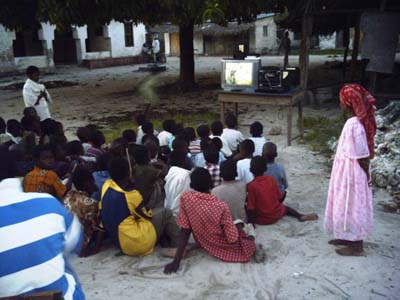
This question reminds me of a legend. They say that about 50 years ago in Africa, when electricity first came to the rural villages, a television salesman gave a TV to one of the village chiefs. The salesman plugged it in, and as he left the village, he was happy to see all of the villagers gathered around the television.

When he came back a month later, the TV was nowhere in sight. Instead, the villagers were gathered around the village storyteller. The salesman approached the village chief.

“Excuse me, where’s the TV?”

The chief answered, “We put it away in the storage hut.”

“But why aren’t you watching it?”

“We watched it for a while. We heard its stories. Then we put it away.”

The salesman was confused. “But you don’t understand. If you keep watching it, it will keep telling you stories. The television knows MANY stories. ”

The chief shrugged. “The television does know many stories–yes, even more than our storyteller. But the difference is, our storyteller knows us.”

If you want to learn how to use listening and storytelling skills to build relationships, email ruth@biznarrative.com or call 510-338-0241.

Posted in Uncategorized | Comments Off on Which Story Matters Most?

BizNarrative.com goes live

What a moment when a new blog goes live. Suddenly, your story is out there for the world to see, read, and respond to. Makes you want to be sure to get the story right! As a writer and storyteller, I find myself agonizing over exactly how to tell the story of what I do, and who I am. Yet long experience has taught me that a story often “finds itself” only when I tell it out loud to a willing, engaged listener.

So here I go: So glad that you’re out there listening! Please come back often–I’m looking forward to a long, rich conversation with you.

Posted in Story Crafting | Tagged , , , , , | Comments Off on BizNarrative.com goes live

Crafting Your Business Narrative–A Lifelong Process

As a Business Narrative consultant, my job is helping people craft and tell the business stories that will help them win audiences. For both themselves and their organizations, they need stories that show:

• Who they are–what makes them unique and trustworthy?

• How they got to where they are today–how did their journey shape their destiny?

• Where they’re headed–what’s their vision of the future, and their role in it?

Some of my clients are surprised to learn that, while I can easily help them with their stories, it’s been a long journey for me to develop my own business story.

I’ve been a Business Narrative consultant for over ten years. In that time, I’ve told people the story of what I do—helping people and organizations tell their best stories—at least 500 times. Each time, I lean in close, I study their faces as I tell my story, I look for the flash of understanding and the gleam of shared passion—I watch their faces to judge how my story is working. Then I go back to my dream space (aka, the corner chair in my office) to refine, rework, and retell the story. How best can I convey what I do? How can I vividly illustrate the benefits of working with me to create a powerful story?

This process takes time. And the best way to do the work is to tell your story, over and over, to a thoughtful, receptive listener who can help you take your story to the next level. What details should you include? How long should the story be? How technical? What images and metaphors are buried within the work itself that you can highlight and weave through the entire story?

I take each of my clients through this process. We begin with informal exercises that take us far afield from our final goal of a 10-second introductory story. We expand, explore, explain, digging for the buried treasure of their work stories. Only after we’ve collected a rich assortment of images and anecdotes do we begin to prune and shape the material into the actual story that they might tell to a prospect, colleague, or acquaintance at a social event.

As I tell them, a story is far more memorable than the “dead fish” of a job title or a business card. Stories build bridges between people, helping establish the relationships that all successful businesses thrive on.

By going through the story-crafting process consciously, my clients are able to expand and adapt their stories to fit different audiences and occasions. And when the core nature of their work changes, they come back to me again to help them modify or craft a new story.

If you’re ready to embark on the story crafting process, please contact me at info@biznarrative.com.

Posted in Coaching, Story Crafting | Tagged , , , , | Comments Off on Crafting Your Business Narrative–A Lifelong Process

Spreading the Word: How to Collect Your Organization’s Stories

Want to motivate donors to give to your cause? Studies have shown that telling a story is the single most effective way to motivate donations—more effective than statistics, and even more than statistics and stories combined.

So: if you want to expand awareness of your organization, start collecting stories from everyone who comes in contact with you. Not only the beneficiaries of your work, but the employees, volunteers, and donors who make your work possible. This applies to both private and public sector organizations—because all of us need to motivate our target audiences to commit themselves to working with us.

Last week, I had the pleasure of speaking about the power of narrative to 150 people from non-profit food banks and soup kitchens. They were attending the annual Harvest of Knowledge Agency Conference hosted by the Second Harvest Food Bank. Their challenge, as assigned by Second Harvest’s CEO, Kathy Jackson, is to collect stories from their clientele and share them with the Second Harvest Food Bank, so that the Food Bank will be better able to gather more donations.

I encouraged the group to broaden their definition of those whose stories they should collect to include food recipients, volunteers, individual and organizational donors, and themselves. All of these people are characters in the story of how Second Harvest nourishes people, in body, mind, and heart.

In order to fulfill their assignment of gathering stories, every one of the agency workers I spoke to must expand their focus–because food banks and soup kitchens are nourishing more than just the bodies of their hungry clientele. They’re not just moving food from storehouse to kitchen table. When they listen to their clients’ stories, they also nurture their sense of self-worth, and their ability to create meaning from their experiences.

All the members of the Second Harvest community can tell stories that answer:

• Who am I?

• What has led me to this place in my life?

• How do I envision the journey unfolding from here?

• What tools do I bring with me?

• What outside help is available to me?

• How is my journey enriched by my traveling companions, the obstacles I’ve overcome, the character strengths I’ve employed?

The challenge is to create the time and the place where these stories can be exchanged. In the day-to-day hustle of business, checking items off of to-do lists and making sure that perishable groceries are delivered on time and to the right place, how do you create an opportunity to hear people’s stories? It can’t be done through a written questionnaire or an online survey. Stories thrive on face-to-face interaction, on intimacy, on the listening ear and the delighted glance.

What does that mean for organizations in general? It means that story collecting needs to be a full-time, all-hands-on-deck, organization-wide activity. Everyone needs to make time for sharing stories, because your stories are the seeds that help your organization grow.

I encourage my clients to make a physical space for storytelling: Create a comfortable area for sharing stories, a table with two chairs facing each other, a pot of something delicious to share, an inconspicuous recording system, and most importantly, an eager ear waiting to be delighted by a story.

Then, create new ways to share the stories you collect. A website is classic, a newsletter works well, even a “tale of the week” email that celebrates both a story and the person who collected it. Your stories preserve and pass on your organization’s culture and values—don’t let them slip away.

If you would like to learn more about using stories to increase awareness of your organization, please contact me at ruth@biznarrative.com.

Posted in Keynote Speeches, Story Crafting, Workshops | Tagged , , , | Comments Off on Spreading the Word: How to Collect Your Organization’s Stories

The Power of Storytelling: Service Above Self

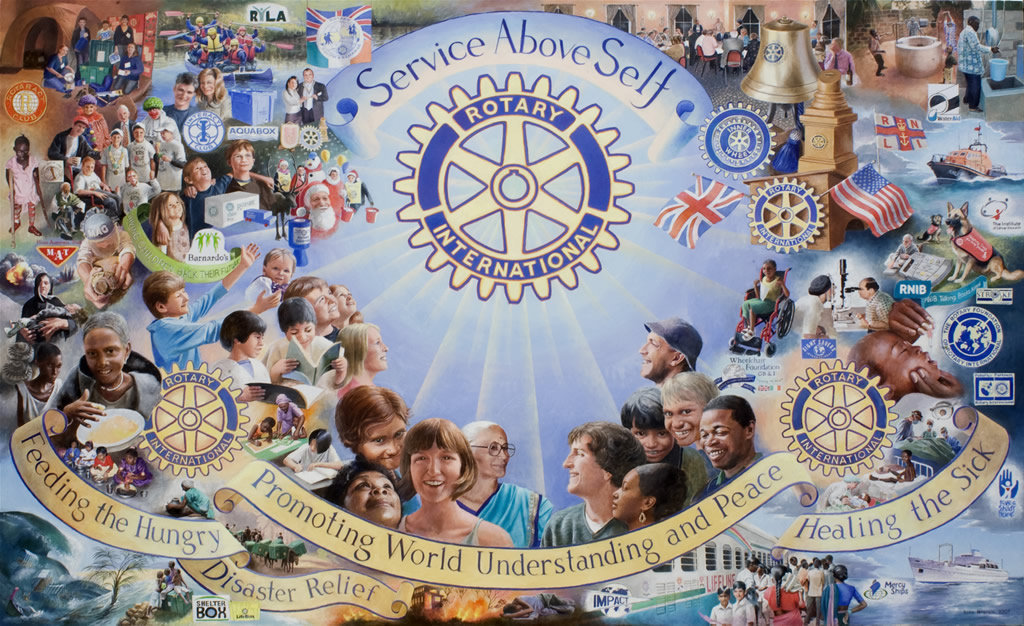
Service Above Self

Last Thursday, I was invited to the Oakland Rotary Club to give a speech on “Galvanizing Your Colleagues with the Power of Storytelling.” To my delight, in a completely unplanned moment of synergy, the meeting opened with an electrifying illustration of my message: that a memorable story can transmit and reinforce the culture and values of an entire organization.

The motto of the Rotary Club is Service Above Self. Brief, concise, accurate. But how amazing when that abstract motto is embodied in a story like the one told by Past District Governor Brad Howard. In simple, direct language, he described the plight of a German family whose son fell into some kind of depression while on a Rotary Youth Exchange in Mexico City. His father flew from Germany to pick the boy up. Their return flight included a plane change in San Francisco. As they were changing planes, the boy collapsed, unable to walk.

The boy was sent to Oakland Kaiser, while Brad Howard contacted the Oakland club’s Executive Director, Lori Sinclair. She got on the phone with all the Rotarians in the region, and managed to find one who was fluent in German. This man went directly to the hospital, where he translated the terrible medical news for father and son: the boy had a brain tumor. It was growing so quickly that the boy was already starting to lose facial recognition and language. Surgery was required.

While the man was helping the father and son at the hospital, his wife was at Target, buying sweat pants, pajamas, toothbrushes and shaving gear—all the daily equipment that had been sent on to Germany when the father and son had to leave their flight. The Rotarian and his wife, two working parents, invited the German father to live with them and their children while his son was in the hospital. By sharing their home with him, they provided him with the daily routines and comforts of family that he would never have found in a hotel, alone and in crisis in a foreign country.

Soon the boy’s mother flew over from Germany to be with her son and husband. She, too, was invited into the Rotarian’s home, and received their care during the three weeks her son was in treatment.

The surgery was successful, but the cancer was so fast-growing that the boy needed chemotherapy as well. The question was whether he should remain at Oakland Kaiser, or return home to Germany. His parents, awash in the crisis of the moment, didn’t know what to do. So the Rotarian contacted the German health care system directly, explained the problem, and made all the arrangements to have the family flown home to Germany for treatment.

The boy is now responding well to treatment at home in Germany. And the Rotarian, Rich Hallock, has received a Paul Harris Fellowship in honor of his generous service.

I had the privilege of hearing this story from the stage. This meant I could watch the story’s effect on the audience: I saw people’s shoulders relax, their faces open, their bodies lean forward, caught up in the emotional current of the story. At the end, that room of over 100 people gave Rich a standing ovation, and not a single eye was dry.

I was so moved I wasn’t sure I’d be able to stand up and tell my own story, about the importance of using narrative to create a memorable, moving message. Everyone in the room was already on board, though–because the best example of the power of narrative had already been delivered.

Through workshops, keynote presentations, and one-on-one coaching, I can teach you how to galvanize your colleagues with the power of storytelling. If you would like to turn the experiences and anecdotes from a typical workday into a story that embodies your organization’s values and goals, please give me a call at 510-338-0241 or write to info@biznarrative.com

Posted in Keynote Speeches, Story Crafting | Tagged , , , , | 1 Comment